I'm a project manager, not a developer — it must be fifteen years since I last wrote any code. Still, in a short time I built an app for booking the family's cars. Mostly for fun, but also to see how far AI can support the coding. Today the app is on the App Store — and this website is built with AI too. Here's how I did it.
It didn't start with a business idea. It started with two cars, four kids and a few too many arguments about who'd actually booked the car. I shared the whole journey openly on LinkedIn — and it reached more people than I ever expected.
An everyday problem, a challenge from my wife — and the question: “how hard can it be now that AI exists?”
Before anything got built, I talked the idea through with the AI: what the app should do, what matters, what can wait.
The app took shape in Cursor. I didn't write the code — I steered, tested, changed and asked.
Cars could be booked and points handed out. Somewhere around there I realised this was more than a fun test.
The app is now on the App Store. So far it's used by my family and a few others — we'll see where it goes.
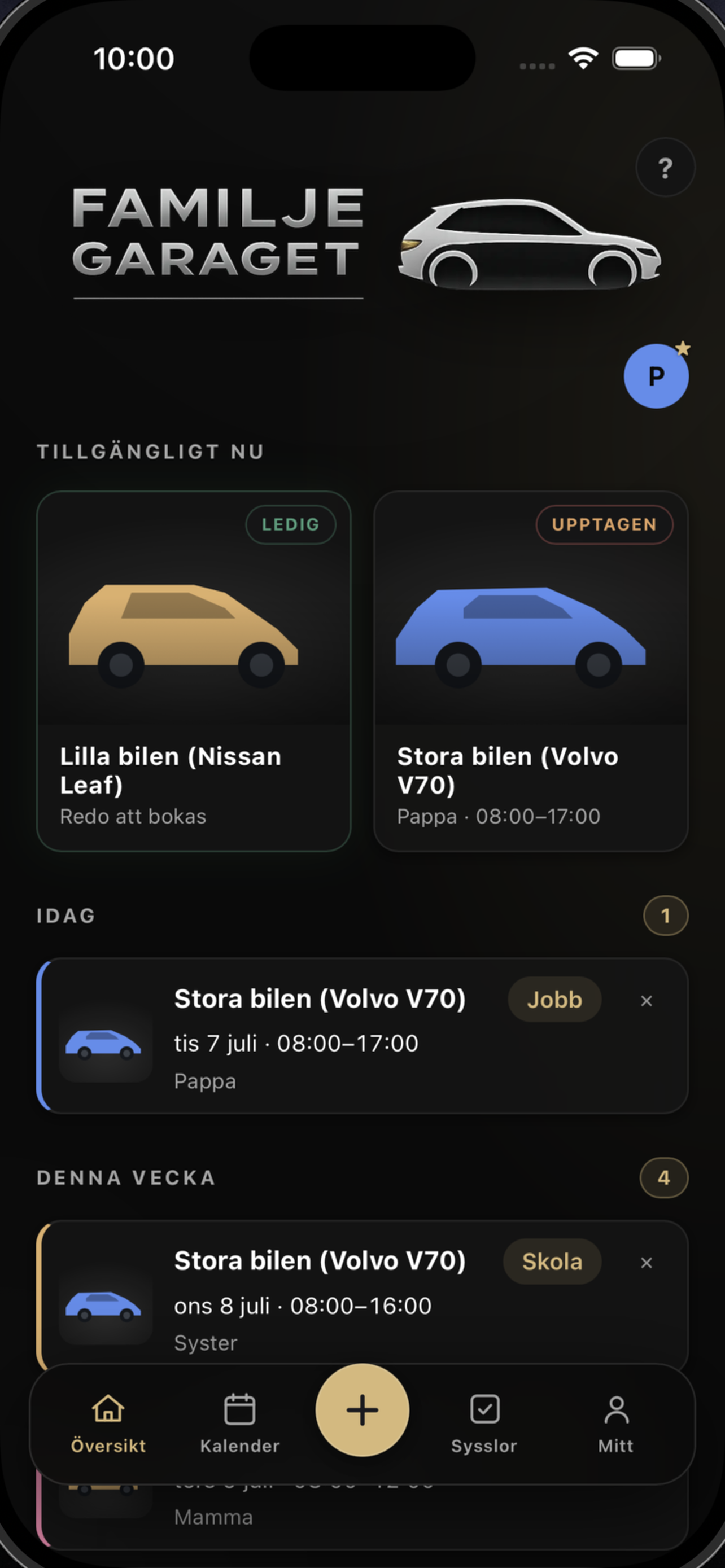
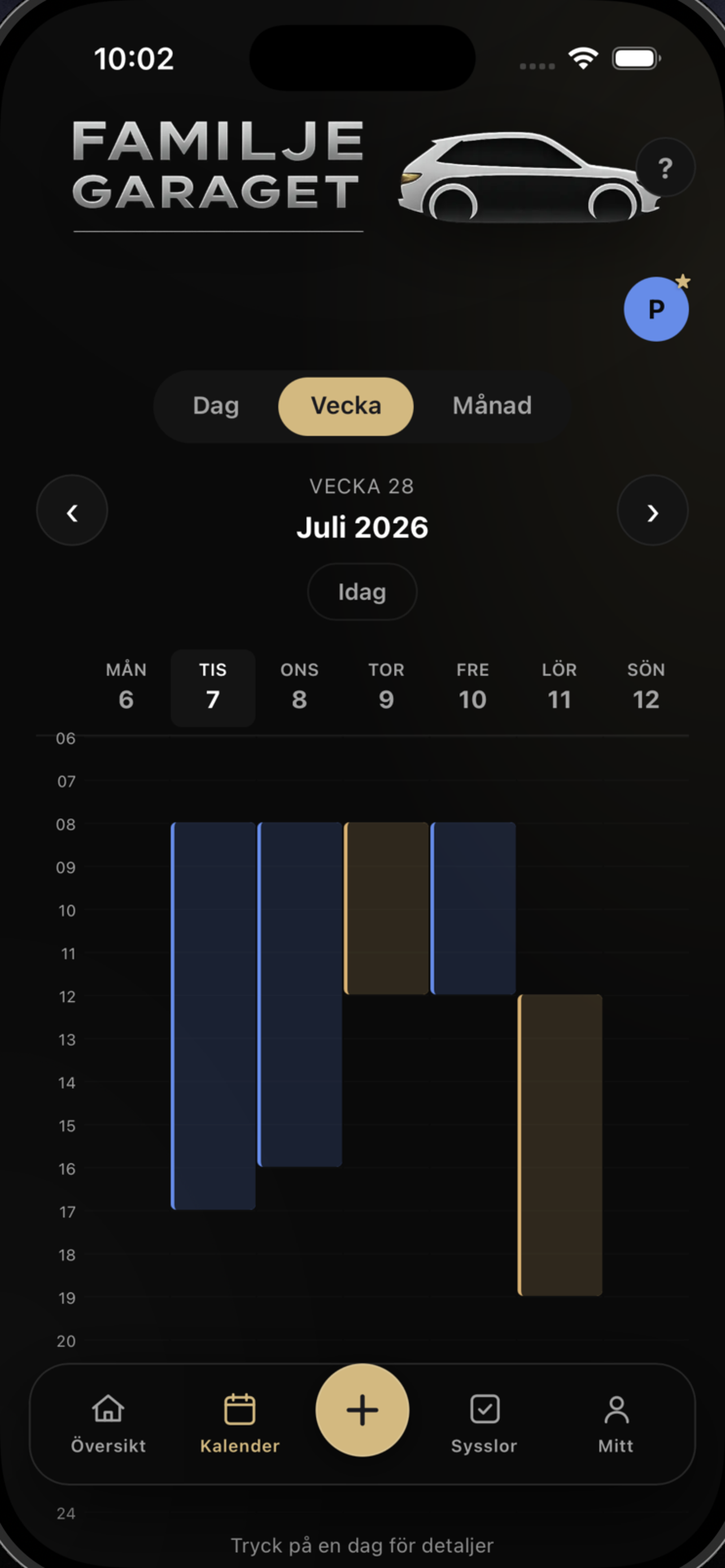
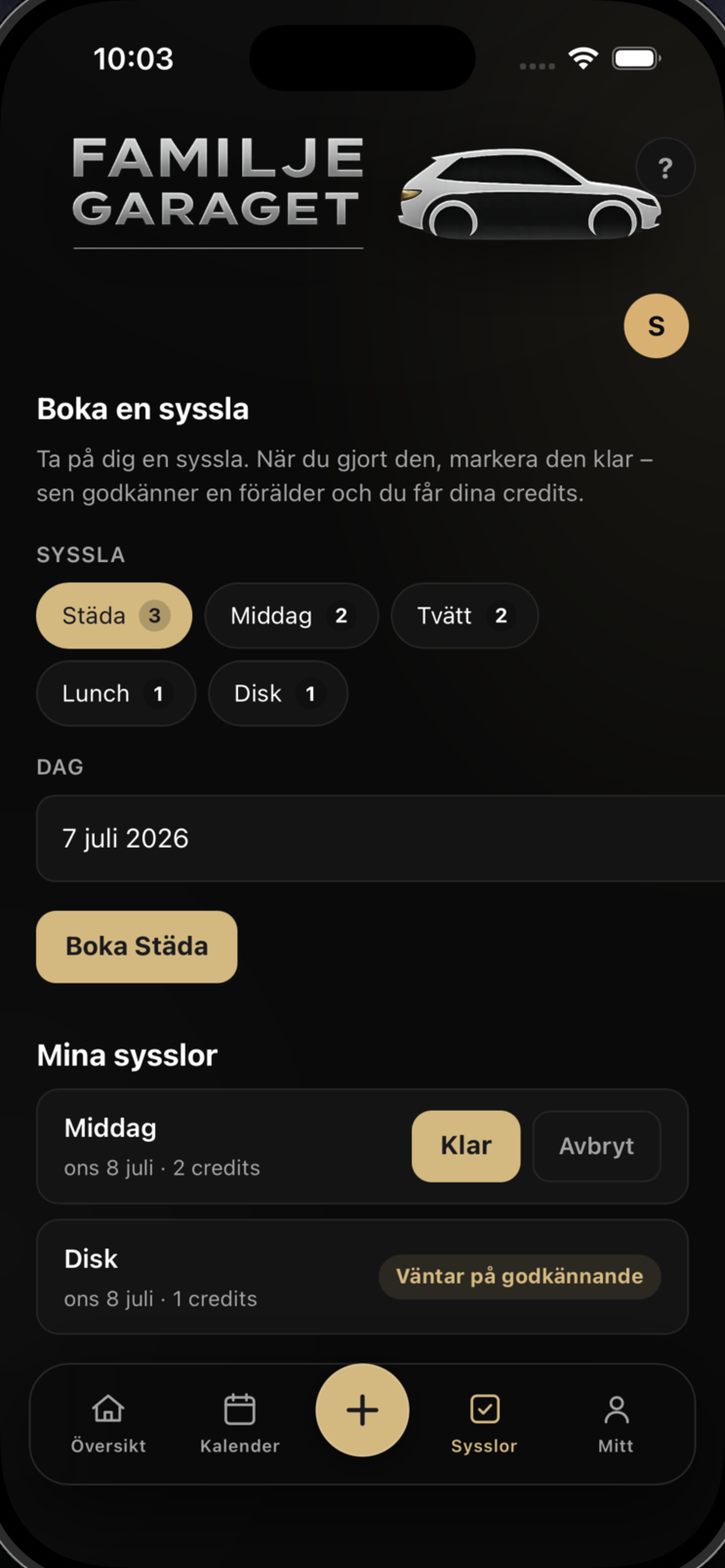
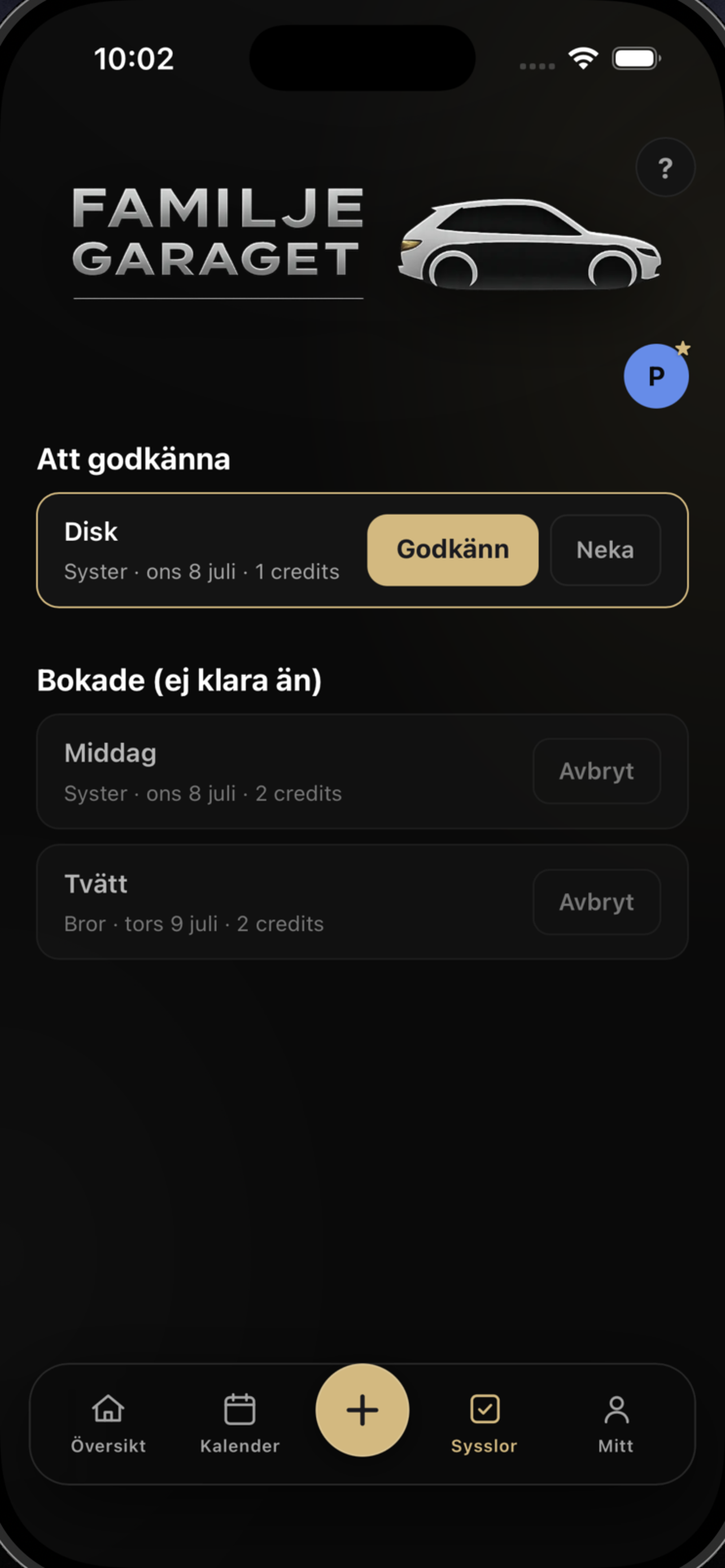
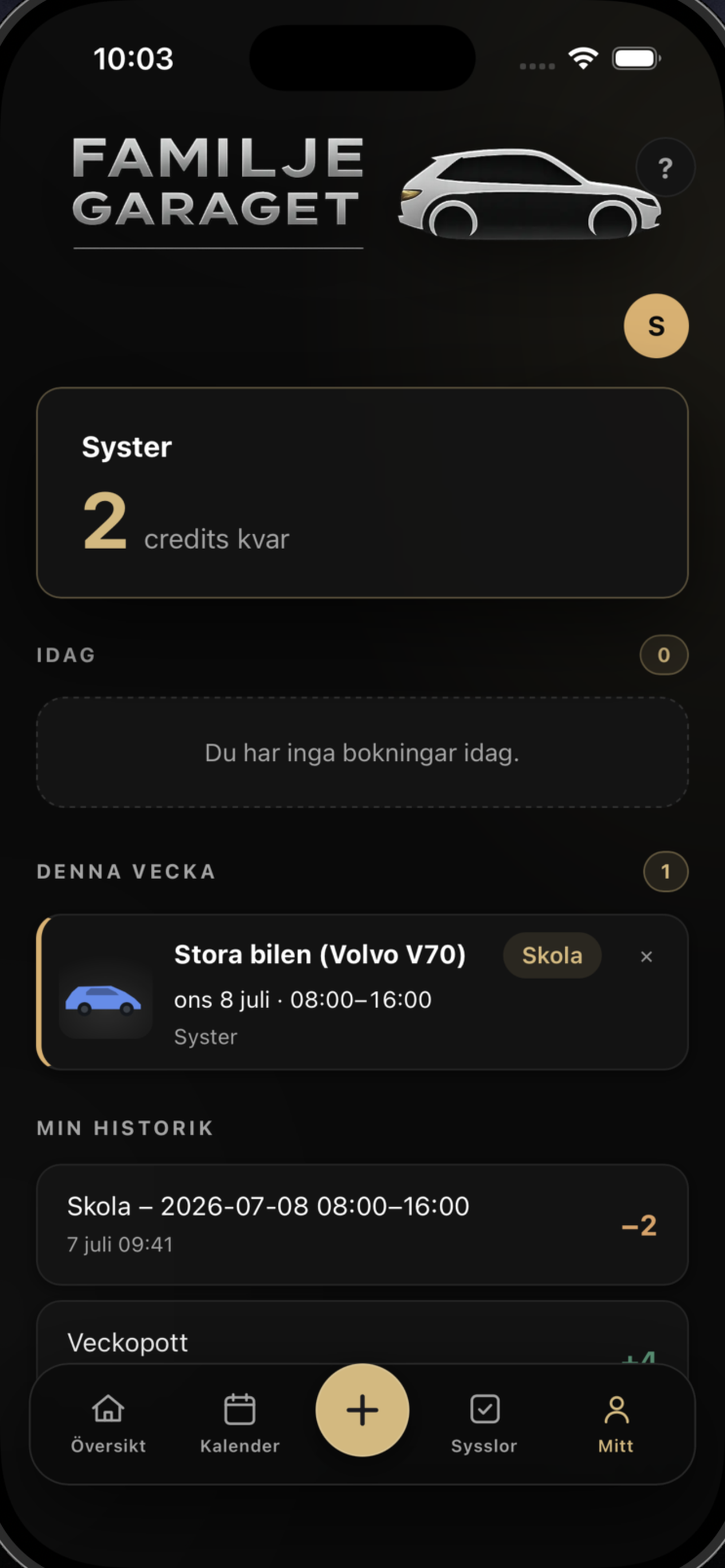
Familjegaraget today — bookings, calendar, chores and credits.
The same craft as in any IT project: describe needs, set requirements, test and decide. The difference is that the “team” is an AI that changes role when I ask it to.
Talk the idea through before anything gets built.
A technical foundation, written down — before the code.
Flows and looks that feel right.
Testing all the way through, a checklist before launch.
The AI writes the code. I review and decide.
Prioritise, set requirements and decide. That part I already knew.
What surprised me most wasn't that AI can write code — it was that it helped me take an idea all the way to something people use.
Familjegaraget has a written-down architecture that was drawn up before the first line of code. It handles several households, updates in real time, sends email in Swedish and can delete a whole household's data when someone asks. Everything was tested against a real checklist before the families were let in.
Familjegaraget proved I can build an app together with AI. The next experiment is harder: can my six AI colleagues sit in on a real Teams meeting — hear who in the room says what, understand the context and chip in when spoken to, with their own voices?
The team joins as a single participant in the meeting — one ear, one mouth. Behind the scenes a “conductor” decides whether and who should answer, and the right colleague speaks in their own voice.
You've maybe seen the clips where someone wires several AIs to speakers, and the chaos that follows. The hard part isn't the tech that talks — it's the tech that knows when to listen. Most of the time the answer should be: keep listening.
Every meeting starts with the team introducing itself as AI and asking permission. Transparency, GDPR and the EU AI Act are there from the first line of code — not bolted on afterwards.
I'm documenting the build openly, just like Familjegaraget — what works and what doesn't.
I'm glad to talk about the build and what I think it means for digitalisation — in conversations and smaller settings, for management teams, IT departments and anyone else interested.
